
Aging: The Good, the Bad, and the Tolerable

S is for Successful Aging
Live Long, Die Short, A Guide to Authentic Health and Successful Aging by Roger Landry, MD, MPH
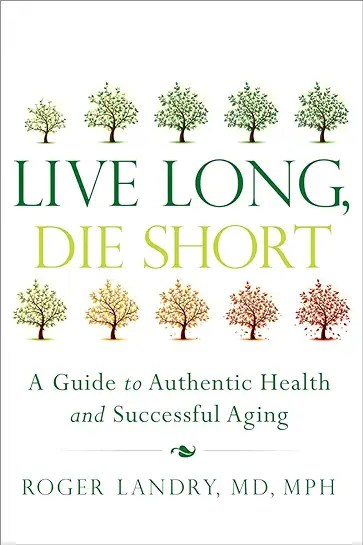
The information in this book is based on the findings of a ten-year study from the MacArthur Foundation’s Research Network on Successful Aging. The study found “how we age is determined more by our everyday lifestyle choices than our genes.”
Here are the ten tips to achieve authentic health and successful aging:
Tip 1: Use It or Lose It
We must consistently use the physical, emotional, and social skills we wish to keep as we age.
Tip 2: Keep Moving
Physical activity, which has been systematically removed from our daily lives, is a fundamental requirement for successful aging.
Tip 3: Challenge Your Brain
With the discovery of neuroplasticity, the brain’s lifelong ability to rewire itself, we’ve come to understand that the brain is not a stagnant organ that inevitably declines in function over time. Rather, the brain has the capacity to adjust and grow and function throughout life as long as we continually challenge it.
Tip 4: Stay Connected
We humans have a basic need to be connected with others in order to thrive.
Tip 5: Lower Your Risks
We cannot ignore our lifestyle risks. We must first identify what they are and then manage them with the knowledge and the assistance of experts.
Tip 6: Never “Act Your Age”
We should not let anyone dictate how we should age or what expectations we have for aging. As long as we keep growing physically, mentally, socially, and spiritually, we will be successfully aging.
Tip 7: Wherever You Are. . . .Be There
Most of our stress is self induced, the product of our unwillingness to acknowledge reality and the inevitability of change. This stress rots us from within, making us more likely to be unhealthy and age poorly.
We are our own obstacles to attaining spiritual growth. We allow the stress and incessant chatter in our brains to keep us from being present in our own spiritual journey.
Tip 8: Find Your Purpose
It is important for us to continue finding purpose throughout our lifetime. Without it, we wither and lose resilience.
Tip 9: Have Children in Your Life
Intergenerational contact has been the rule in our species and remains necessary for both young and old to be whole and more healthy.
Tip 10: Laugh to a Better Life
Laughter is associated with a better aging experience. The reasons are just now becoming clear but increase social interactions, positive physical effects, and a more robust immunological system probably plays a role. Optimistic people tend to live seven and a half years longer than negative people.
The second part of the book includes a Personal Lifestyle Inventory that asks you questions from various parts of your life that are connected to successful aging. Based on your answers, Dr. Landry provides recommendations for aging in a better way going forward with your life.
The questions include:
- How much total time do you spend moving your body during an average day (walking, exercising, doing physical work)?
- How many people did you share a face to face conversation with today that lasted longer than two minutes?
- How many days last week did you learn something new or do something you’ve never done before?
- Are you proud of your answer when someone asks you how you spend your day?
- How many servings of fruits, vegetables, or nuts did you eat most days?
- What is the difference between your current weight and what you weighed at age eighteen?
- How many times today did you feel in a rush?
- How much do you worry?
- How often are you thinking about things other than what you’re currently doing?
- Are you pleased with the quality of your sleep?
- How many times did you laugh today (not just smile, but laughed longer than two seconds)?
- How long has it been since you last interacted with the child?

 Getting Older: Charting the Uncharted
These are all great points, especially the one about interacting with children. Thanks!
LikeLike
I think it works both ways–children gain when interacting
with older people too.
LikeLiked by 1 person
Most definitely!
LikeLike
I think I need to buy this book. Thanks, Marianna!!
LikeLike