
I have stayed clear of amaryllises since I first saw the white flower blooming in a spacious, sunlit home in Maryland right after my mastectomy over twenty years ago. I had joined a support group with other women who had various cancer diagnoses. At the weekly meetings, the white flower grew in height on the coffee table in front of the sofa where I usually sat. I have avoided the flower ever since, choosing not to awaken sad memories.
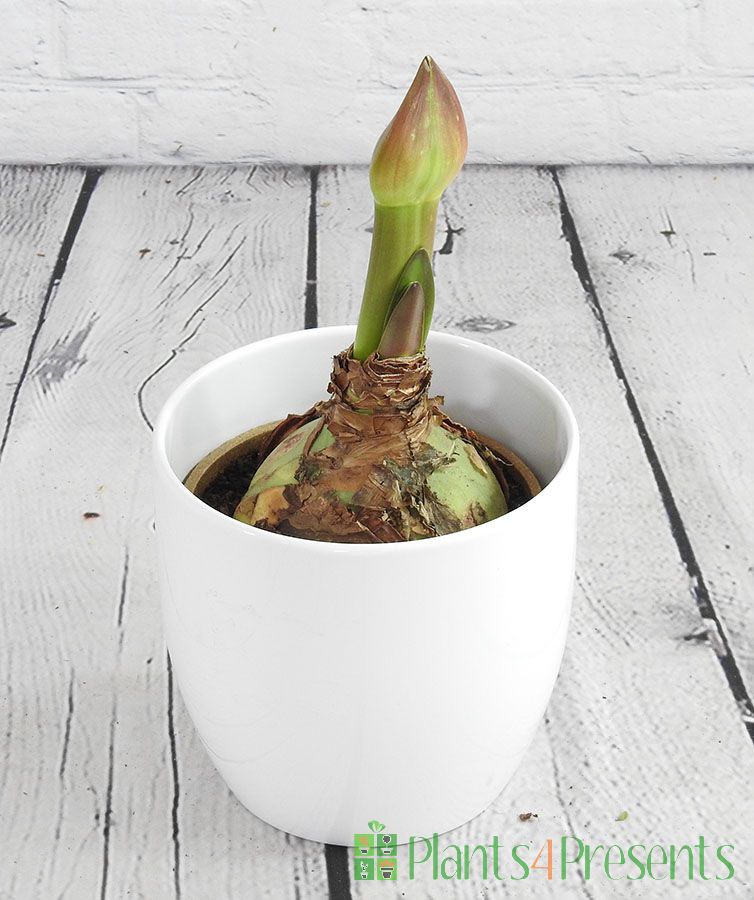
When a friend gifted me a white amaryllis bulb last week, my first instinct was to refuse the gift. But not wanting to be ungracious, I thanked her and found a sunny spot for it to grow and bloom.
Every year following my surgical date, I have contacted two friends who helped me get thorough that difficult time. When they moved away, I sent emails to remind them that I still appreciated their support. Finally, after ten years, I realized I didn’t need to hang on to my surgical date like a time-honored anniversary to be cherished. I believed my friends knew by that time my appreciation was genuine. I dropped the reminders. I no longer identified myself as a “cancer survivor” and got on with life.
Back to the amaryllis. It’s no longer an emblem of a cancer. I have changed the scenario. Now I see the amaryllis as a symbol of rebirth. I’m reshaping my past with new knowledge fed by life experiences as I grow older—do I dare say wiser? Here is the post I wrote about the amaryllis in 2013.
In my last post I wrote about the trauma surrounding my cancer diagnosis. In spite of mostly negative consequences of living as a “cancer survivor” there were a few positive occurrences. For example, meeting special people I would have never encountered under normal circumstances.
A month after my mastectomy I joined a cancer support group hosted by a woman with lymphoma in her large Victorian home with a wrap around porch in Chevy Chase, Maryland, not far from where I had worked at the National Institutes of Health. Three of the seven regular members had had breast cancer. The other four had a variety of other cancers.
At the start of each meeting we held hands in a circle while Gregorian chants played in the background, the music soaring up to the ten-foot ceilings and swirling about the large elegant living room. The leader asked we pray for those present and not present that were still struggling with treatment, suffering with pain or hoping for remission. Then in silence we made our own supplication. Invariably, as I stepped on the polished hardwood floors to take a seat, I felt a peace settle over me.
Besides the seven group members, other women sporadically attended our meetings. Once, a young woman sat opposite me on the flowered sofa. In front of us, on the glass and chrome coffee table, a snow-white amaryllis sprouting from a bulb set in a deep blue planter. Young, thin, with long dark hair, she spoke about the aggressive breast cancer that would soon end her life. She had a husband, pre-school children and a hunger to live.
She mesmerized me with her research to find a cure. Depleting resources in the area, she found a practitioner in another state and made plans to drive to see him later that week. As she spoke of her hope to halt the cancer’s progression, she stopped mid-sentence. Noticing my rapt attention, or my agonized expression as I listened to her frantic search for a cure, she reached over and clutched my hand. “Don’t worry, your cancer is not as bad as mine.” I squeezed her hand back, unable to speak for I was so touched by her gesture.
Afterwards, I walked down the porch steps and into the winter chill, feeling a bit of survivor’s guilt that my cancer was not fulminating. Eventually, I dropped out of the group.
Each time I see a white amaryllis, I recall the women in that group and their strength, especially the young mother. Her generous comment and concern for me even as she frantically detailed her quest for a cure still overwhelms me.
I never did find out what happened to her. I want to believe on the out-of-state trip she found a curative regime and is now enjoying her grandchildren, putting all the trauma of her cancer behind her.

 Getting Older: Charting the Uncharted
I vividly remember that time, knowing that without a similar experience, I could not fully relate. Now, after my husband’s cancers, the latest one ending his life, I have a better understanding of the effect of a cancer diagnosis. I can appreciate the original symbolism of this flower for you and how, after twenty years, it’s changed to one of rebirth. It gives me hope. A thoughtful post.
LikeLike
I think what happened to me can only happen with age and time.
LikeLike
This is very moving. I’m glad you’re doing well.
LikeLike
Thank you.
LikeLike