
Aging: The Good, the Bad, and the Tolerable

G is for The Gift of Years: Growing Older Gracefully
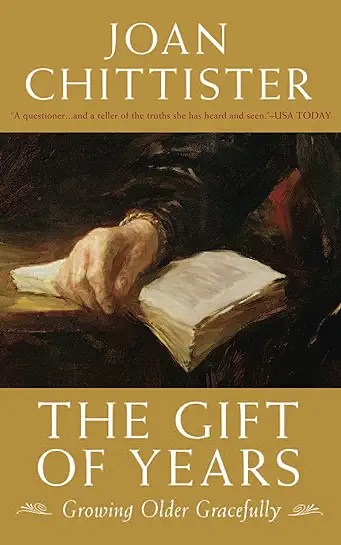
I was given this book a few years ago by a friend and fellow writer who happens to be my age. Once when the heavy load of aging troubled me, she thoughtfully gifted me this book. It’s a book to open, scroll down the table of contents, and choose a topic that speaks to you. I have had many a dreary day that, after reading just one of Joan Chittister’s insightful chapters, the sun seemed to warm my skin.
I confess the word gracefully in the title feels uncomfortable. I have been far from graceful throughout my life. I am foot in the mouth, wish I hadn’t said that, and extremely skilled at embarrassing myself in public. But Chittister’s direction and insights into the journey of growing older have benefited me that I happily overlook the word: gracefully.
Joan Chittister’s take on ageism:
For years now, researchers have known that only five percent of those over 65 (at any one time) are in special care institutions.”
“And yes, more older people than younger ones have chronic illness, but they also have fewer acute illnesses than younger ones. They have fewer injuries in the home, and also have fewer accidents on the highway.”
This and so much other scientific data—the reliability and acuity of older workers, the rarity of mental illness among the elderly, the vibrancy of their emotional relationships as well as their capacity for sexual relations—has been known in the academic community for years now. It is tested over and over, and the findings both remain stable and become even stronger as a new generation of older people claim their natural right to live until they die.”
A blessing of these years is that we (the elderly) are the ones whose responsibility is to prove the stereotypes wrong, to give age its own fullness of life.”
I will refer to this book, The Gift of Years, in a future post.

 Getting Older: Charting the Uncharted
1 comment